Who Owns the Masterpiece?
Story and Photos by Nusaybah Yasin
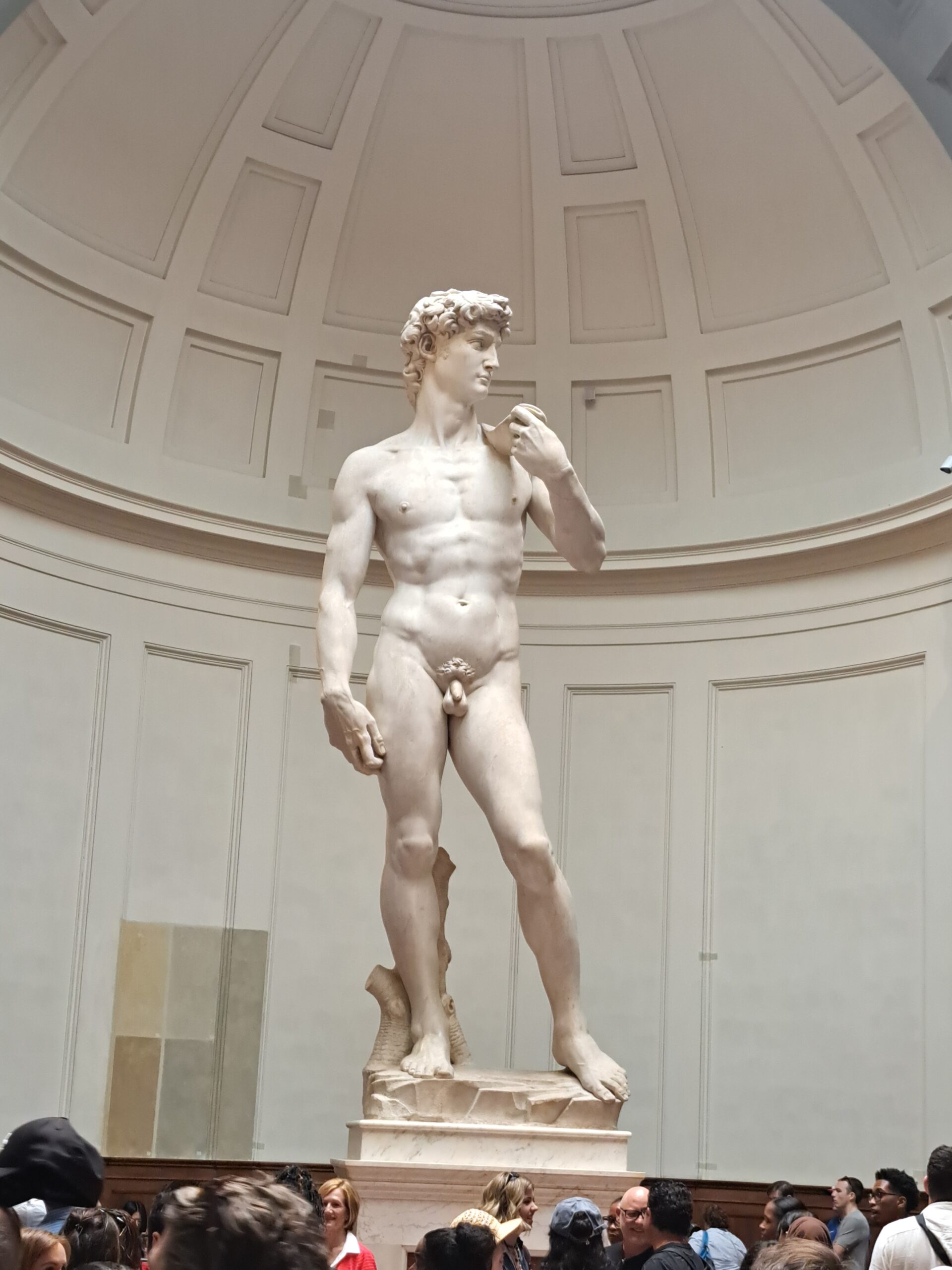
The biblical story of David and Goliath has had cultural significance to the city of Florence for centuries. The Florentine people connected deeply with David, as intelligent, courageous, and determined to triumph against all odds. Those traits reflected the resilient fighting spirit of Florence itself. He became a symbol of resistance, as seen depicted in the abundance of statues and paintings found in museums and historical buildings throughout the city. But the most famous and recognizable David is, of course, Michelangelo Buonarroti’s David, which currently resides in the Galleria dell Academia. He is recognized by art fanatics and the public, and is one of the draws that bring millions of visitors to Italy annually.
Sculpted from an abandoned single block of marble deemed unusable to work with by other artists, Michelangelo’s David emerged as a 17- foot-tall statue between 1501 to 1504. His statue is believed to depict David, with slingshot in hand, before the battle against the giant Goliath. That’s quite different from the earlier depictions showing his victory after defeating the giant, such as the three David statues in the Museo Nationale del Bargello: Andrea del Verrocchio’s bronze statue, Donatello’s marble statue, and Donatello’s bronze statue, revolutionary as the first fully nude bronze statue created at that time.
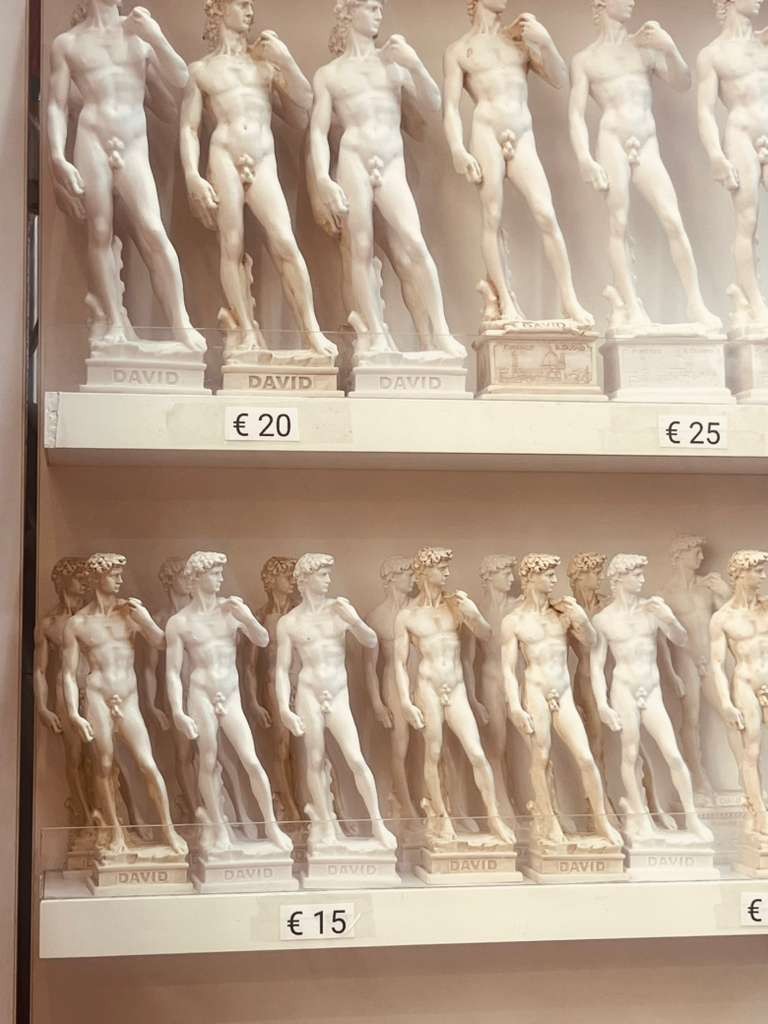
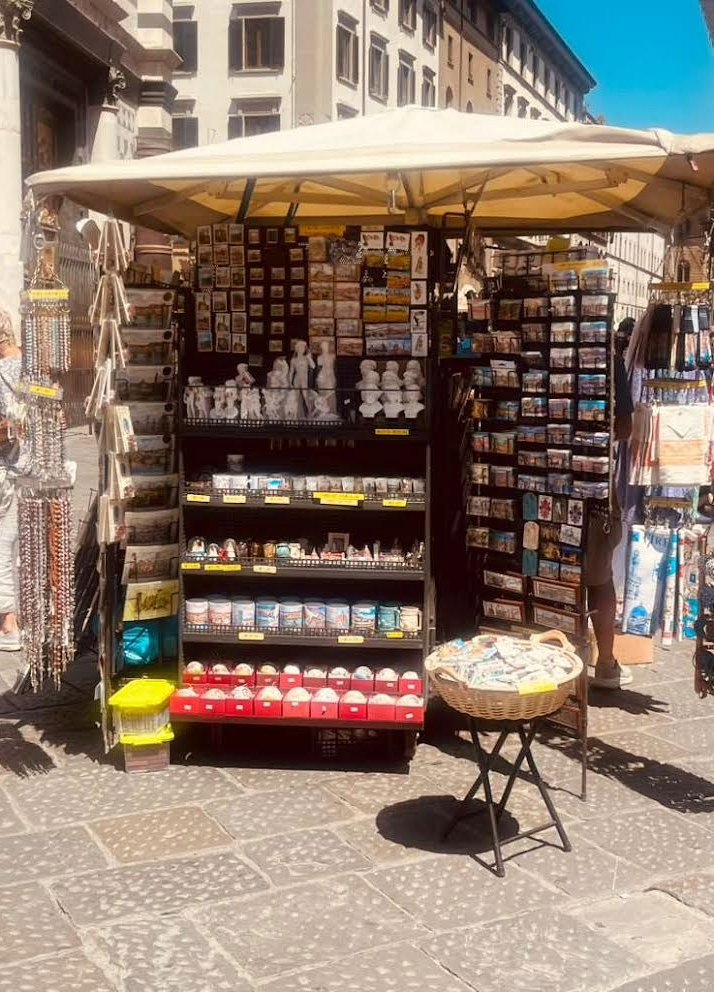
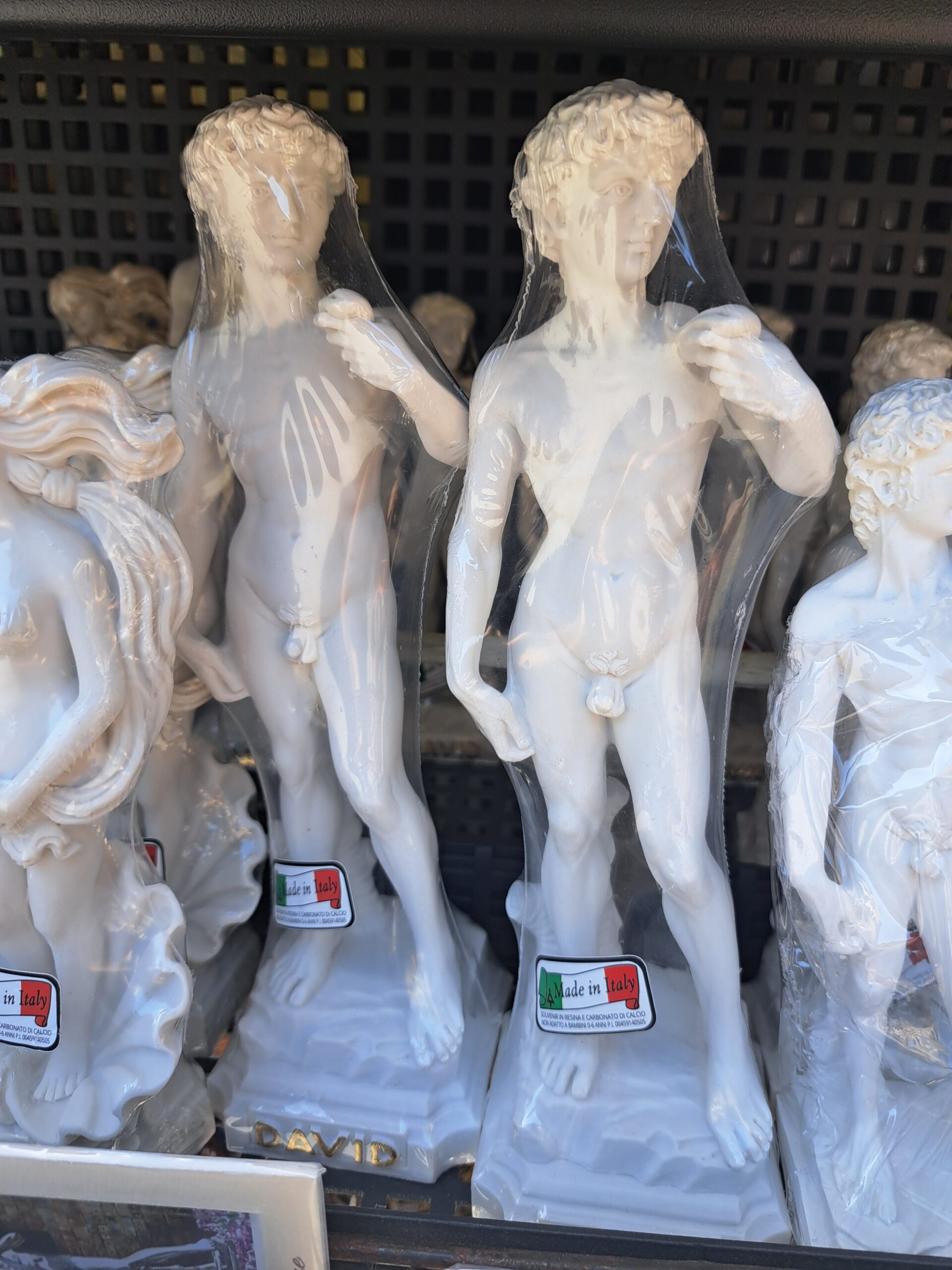
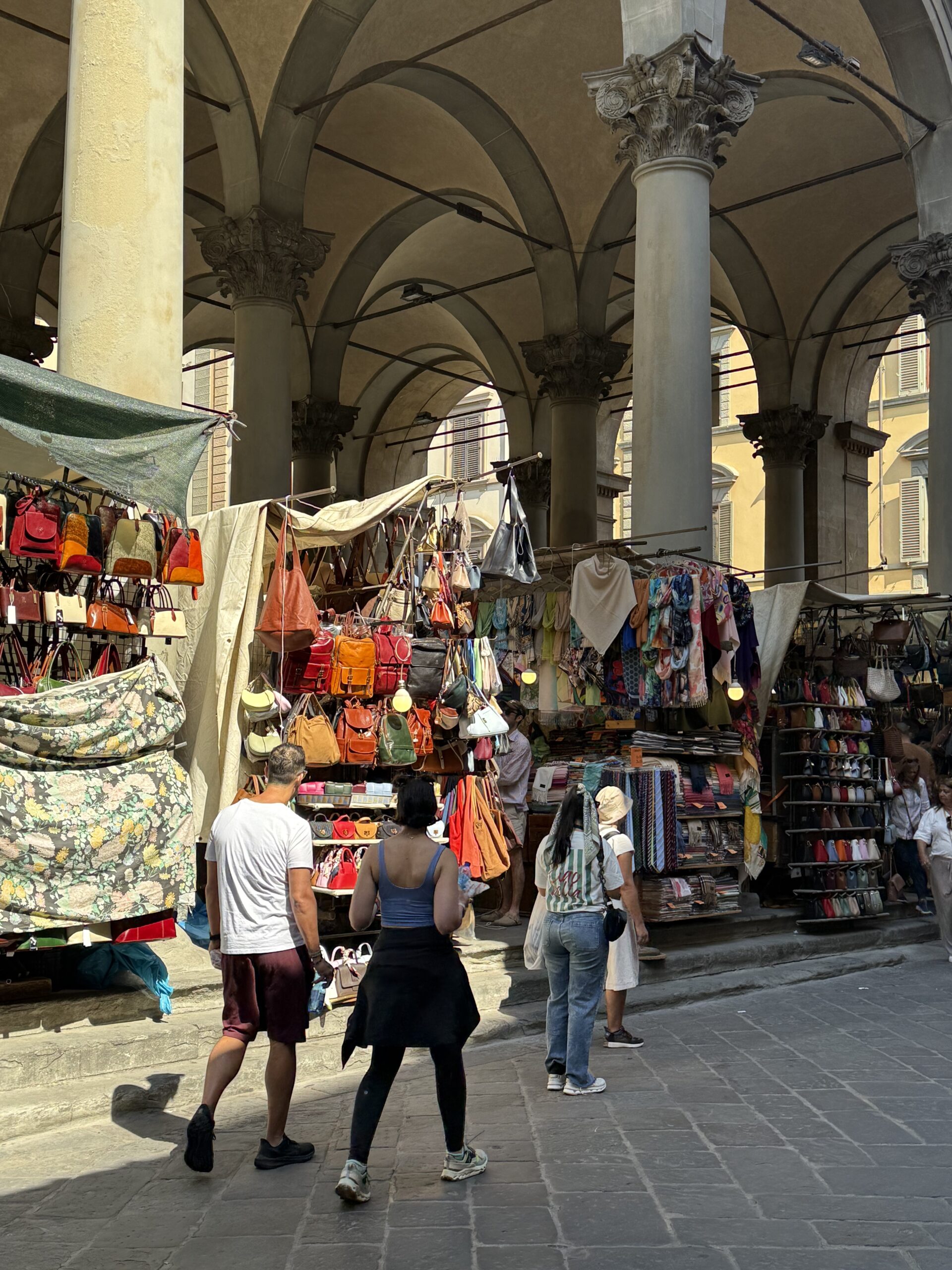
Souvenir statues of Michelangelo’s David, of all sizes, can be found and purchased all throughout the city’s shops and vendors as souvenirs. He is also on keychains, T-shirts, fridge magnets, and shot glasses. You can find his images on almost anything.
Although the physical statue is in the public domain, available for all to view, the statue of David is protected by Italy’s strict Cultural Heritage code, which deems that the Galleria dell’ Accademia holds the image and reproduction rights for commercial use. The museum won a lawsuit in 2023 against a major international publisher that had used David in a series of commercial products without proper authorization. In 2024, the director of the Galleria created a stir when she said mass tourism was turning Florence into a ‘prostitute.’
Only the Galleria can sell David merchandise legally. Vendors on the streets of Florence have a way of selling David statues to the masses through a loophole– making him still recognizable but not to the point where they are exact replicas of the statue–by tweaking the face, changing the color or even adding his name to the bottom of the statues. For most tourists, these slight alterations aren’t a determining factor when selecting a souvenir to take home to family; a simple, mostly inexpensive copy, is usually good enough.