Story and Photos By Noah Gavin
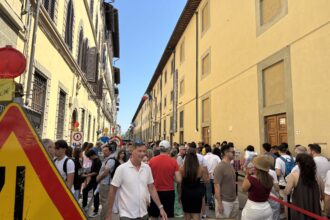
The more than 10 million tourists that visit Florence each year walk the scenic piazzas and streets, while looking for a piece of the city to take back home with them.
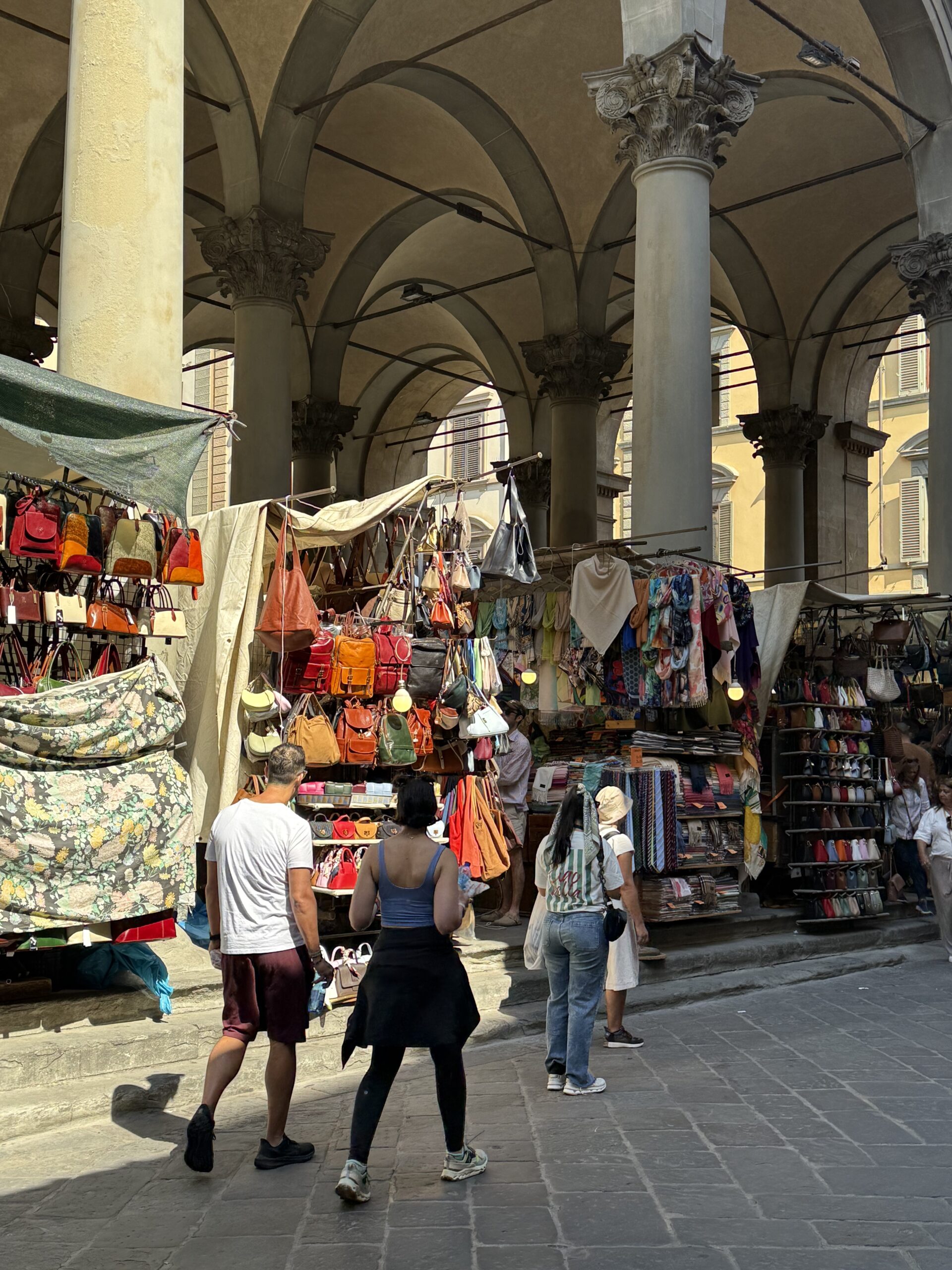
One of the items that tourists crowd the markets for is genuine Italian made leather products, a centuries old staple in Florence.
With more tourists have come many more pop-up leather shops and markets to take advantage of Italian culture to make a quick dollar from the tourists.
The leather products that some of these shops sell soon fall apart and do not have the same quality craftmanship Florentine leather is renowned for.
The Center Market in Florence is full of leather pop-up shops, and a lot of them boast a ‘Made in Italy’ claim.
As tourists have found, these shops will let you analyze their product and get a good feel of their product before you buy it.
Collin Krupp, visiting Florence from the University of New Haven in Connecticut, purchased leather at the Central Market recently after learning of the vendor from his professor.
“This [vendor] seemed nice and very trustworthy, very open and honest and even showed us different tests that they do for genuine leather.” Krupp said.
Krupp is aware that leather products can be faked in Florence, but believes with caution, the right product can still be found.
“[Buying leather in Florence] is taking chances, but you just have to be trusting and [buy from shops] that let you feel everything and you can see it,” Krupp said. “It’s about using your best judgement.”
Krupp said that ultimately, it came down to price when making his choice to buy leather at the Central Market.
“We got a nice discount here,” Krupp said. “When I saw the great deals, I thought ‘might as well [buy something].’”
Krupp has a point about bargain shopping at these leather markets. Some pieces like belts are available for just 30 euros as opposed to the couple hundred euros a belt will cost at shops that claim to be selling more quality Florentine leather.
Despite the multiplication of pop-up leather shops all over Florence that are meant to appeal to visitors, there are still family leather shops making products with traditional Florentine leather craft.
Kashyapi Dave, a local leather tour guide in Florence and sustainable tourism grad student, hosts tours that give tourists a walkthrough of several family-owned traditional Florentine leather shops that sell truly made in Italy products, because she believes it is important knowledge to have while travelling to a foreign country.
“[Values of traditional artisans] can be diminished when [tourists] aren’t aware,” Dave said. “They should be able to appreciate the difference [between real and fake leather] and appreciate what the location you are visiting has to offer you.”
Dave tells all her tourists how important passing down their leatherworking traditions is to Florentine leather families.
“As opposed to big corporations, these businesses in Florence need tradition to move forward,” Dave said. “This is why we see a lot of this in [trade jobs] all over Italy.”
Tradition being passed down from generation to generation is what creates a quality “Made in Italy” leather product.
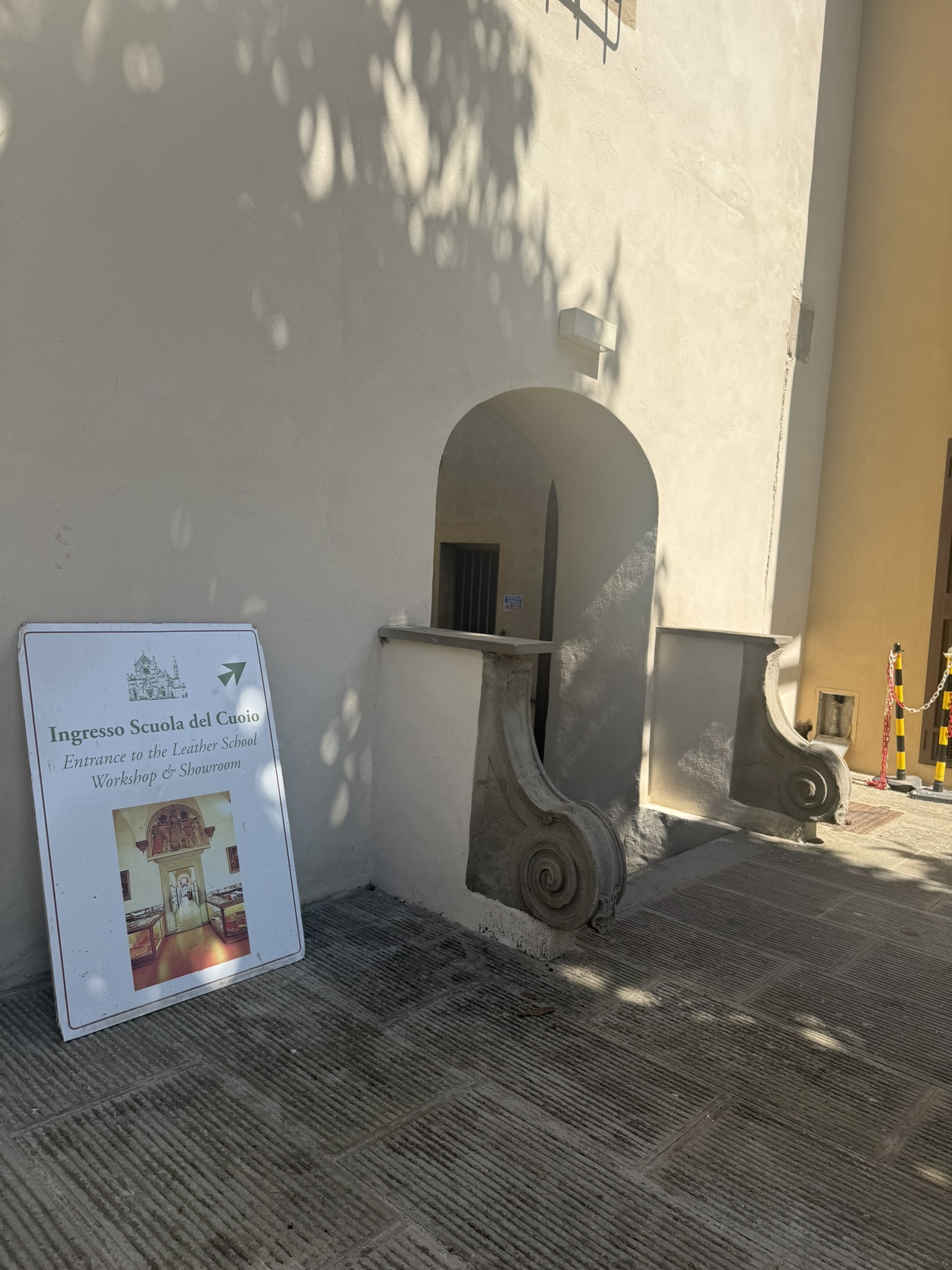
One of these generational places is The Scuola del Cuoio, located behind the Basilica di Santa Croce, poetic as Santa Croce was home to many intensive tanneries that utilized the Arno River for tanning leather.
The Scuola del Cuoio opened in 1950, beginning as a school for young men coming out of the war or orphaned children an opportunity to learn the craft Florentine style and get a job.
Today, the school still hosts leather working classes.
Nikki Guasti, public relations manager of the Scuola del Cuoio, says that their tenure of selling leather in Florence is what gives them the edge to the tourist shops.
“We’ve been here a long time, since immediately after the Second World War,” Guasti said. “So in that time, people have come to trust us, in this industry [customers] love to find you again and again.”
While local guides will tell you a lot of the pop up shop products are mass manufactured in China and shipped into Italy, Guasti explained why these tourist shops can sell products that misleadingly claim to be made in Italy, even if they are not up to Florentine’s historical standards.
“You can have the ‘Made in Italy’ tag even when everything is made abroad and at the last moment it is sent into Italy and accessorized, for example.” Guasti said. “This is why all of our leather still remains native, here Made In Italy means, Made in Italy.”
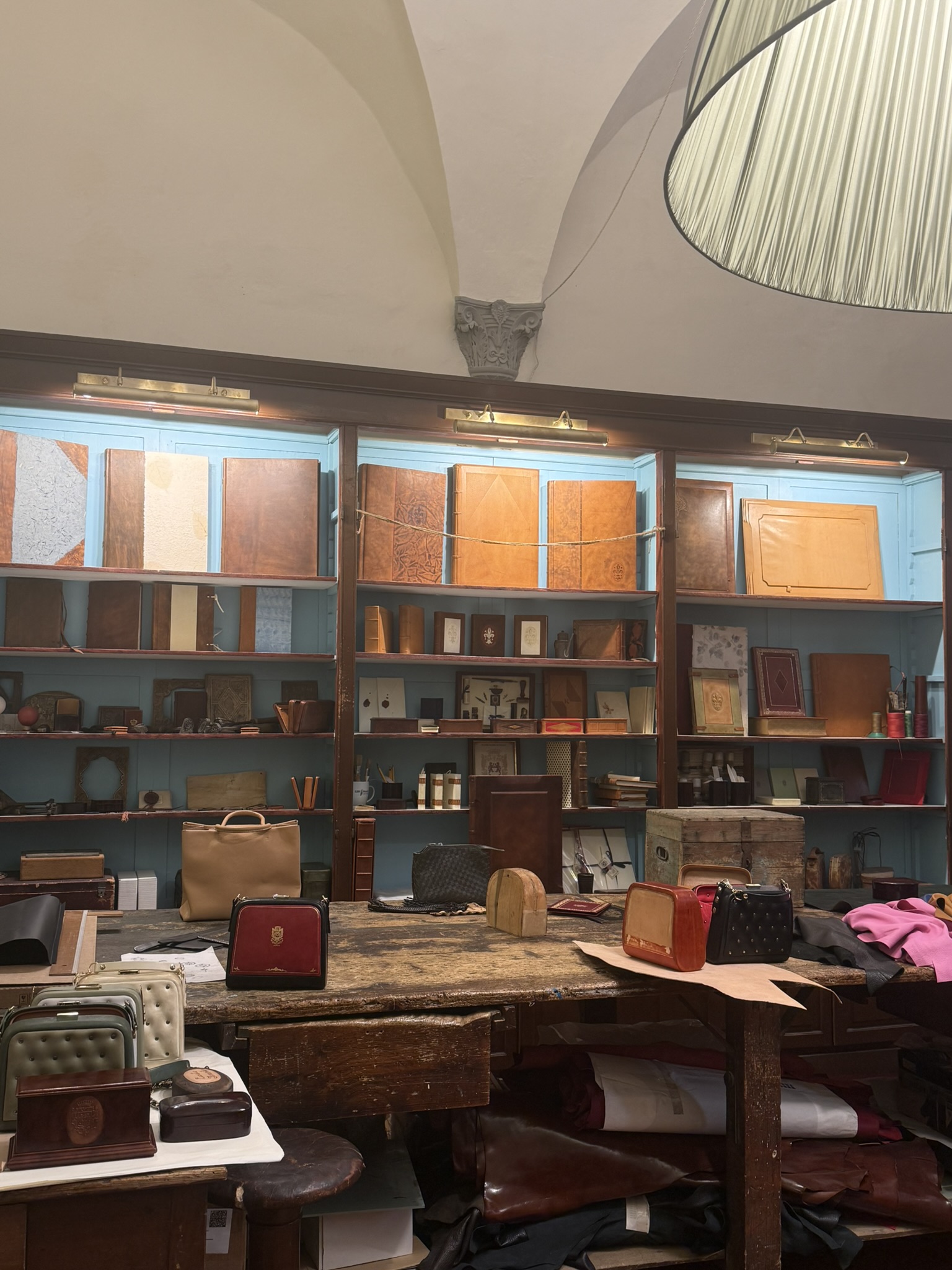
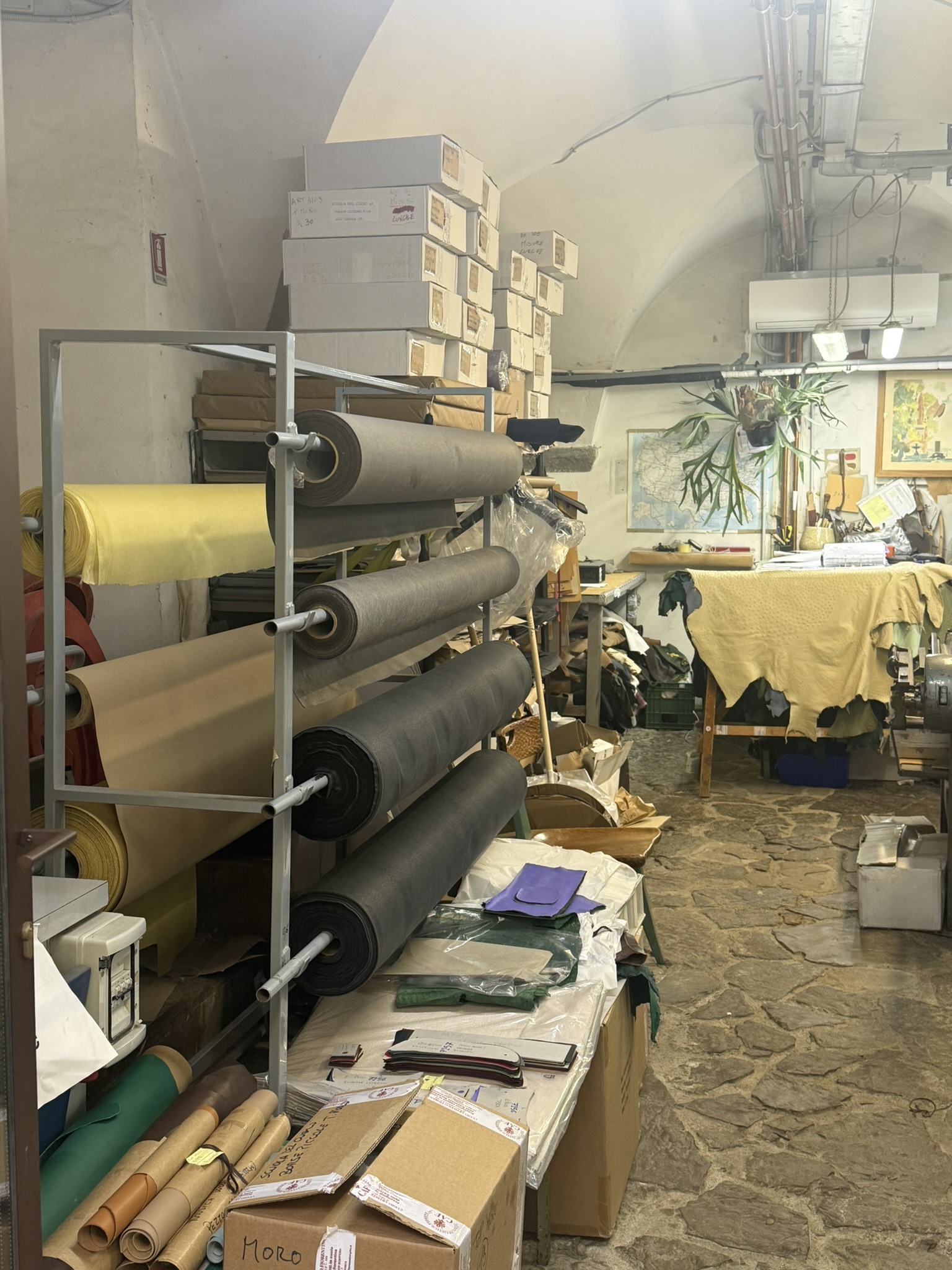
The Scuola del Cuoio not only smells of rich leather all throughout but remains connected to Santa Croce’s leather history as shoppers can see real leather artisans through the windows of their workshops or even at tables around the showroom working on new products.
Another place with ties to the Santa Croce area is Galleria Michelangelo, located in the shadow of the Basilica of Santa Croce.
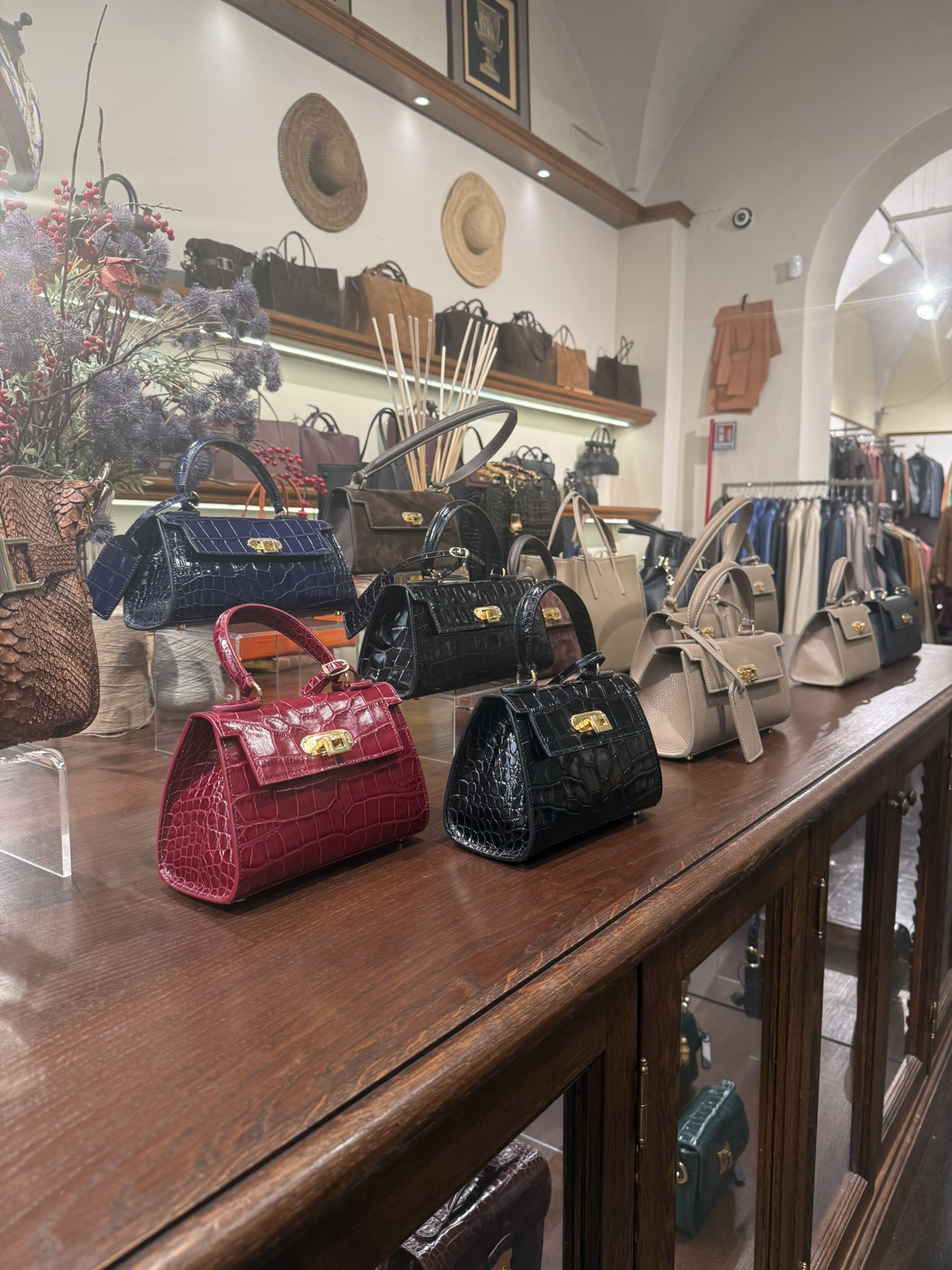
The leather shop has been operating since 1960, and also has many leather artisans around the showroom that can be seen working on their new products and customizations for customers.
One of these leather artisans, Rafael, works hard on custom orders for the shop that ship out all around the country.
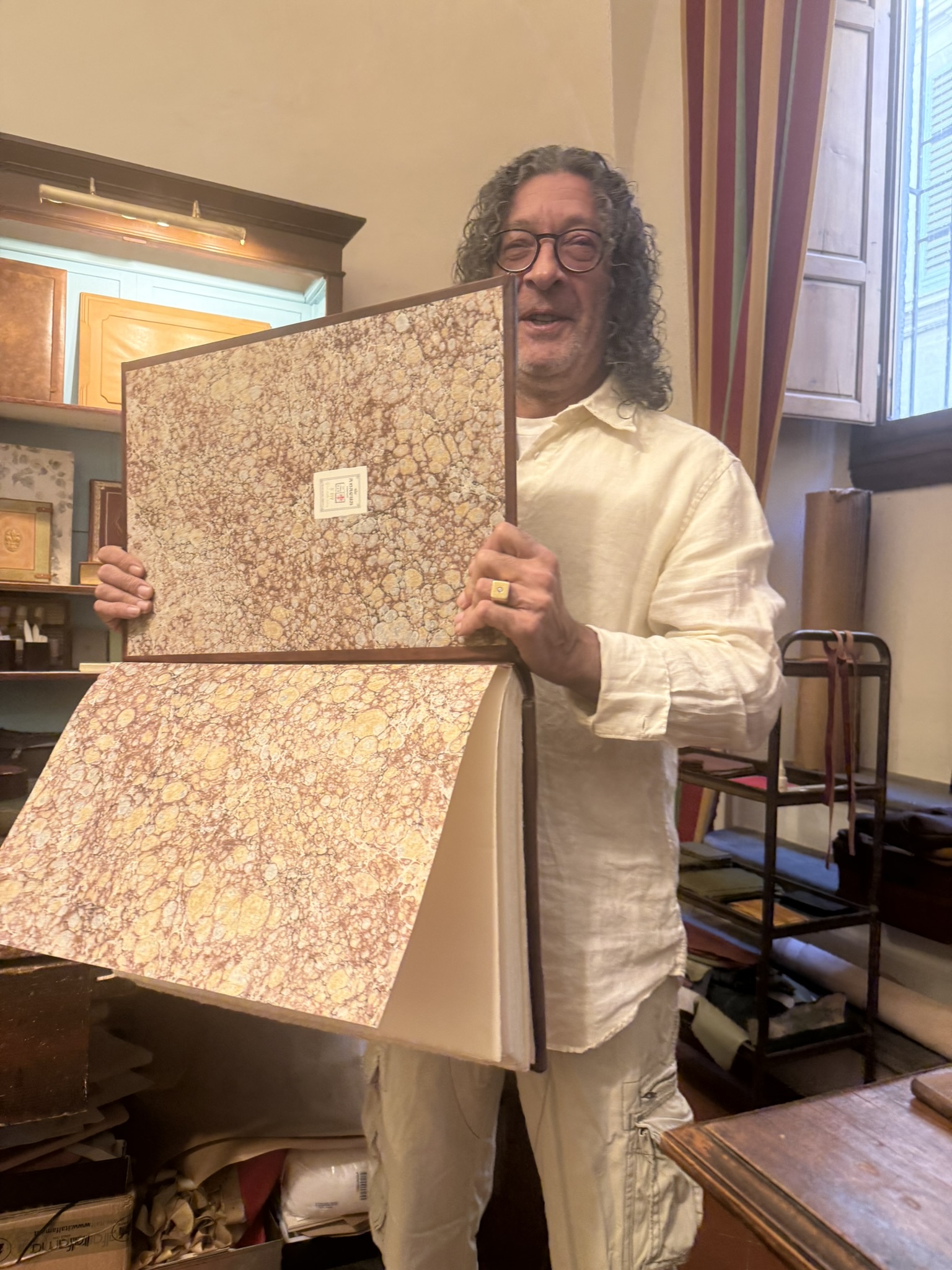
Rafael enjoys this kind of work, because he knows that these custom orders are what sets genuine Florentine craftmanship aside from the fakes.
“We don’t believe in mass market goods here,” Rafael said. “Our owners are like leather collectors, they believe in the beauty of leather and our products.”
Rafael said that products purchased at the Galleria Michelangelo will last so long, that they will not just be enjoyed by the buyer.
“We don’t make a product here that will need to be replaced in two days,” Rafael said. “For example, if you purchase a jacket here you will be able to pass it through your grandsons.”
Rafael demonstrated the quality of true Florentine leather products with a large leather-bound photo album he was working on for a client in the United States.
Rafael held up the album, holding it just by the front cover, and shook it, showcasing its strength.
“This is the book of the future,” Rafael said. “It’s a heavy book, but thanks to our real leather spines, it will last forever.”
Rita Brigante, a sales manager at Galleria Michelangelo, says that many shops, especially the ones around Santa Croce, take advantage of tourists’ desire for a regional souvinir to sell misleading products.
“[Santa Croce] is the leather district, so everyone can be fooled into thinking everything is maximum quality,” Brigante said. “But it’s not, you see 23 different stores with the same items, it’s a little sketchy.
Brigante says that the history of their shop dating back to 1960 is what gives them the most credibility while these leather pop-up shops show up more recently than you would expect.
“We have a lot of history behind us, whereas [around Santa Croce] you have many, many leather stores that opened [as recently] as yesterday,” Brigante said.
Brigante has tips for what tourists can look out for when visiting Italy looking for quality leather.
“Genuine leather has imperfections; it can have wear and scratches, so focus on what you are buying,” Brigante said. “Also, the price, if it is a bag for 10 euros, how can that be real leather?”
Brigante acknowledges that not everyone is going to come to Florence looking for traditional leather when it comes at a premium price, but they cannot be surprised when fake leather needs to be quickly replaced.
“There are going to be people who do not want to spend that much money on leather, and that’s up to them,” Brigante said. “We can recommend they go to the leather market, but for the price it cannot be very good quality.”