Story, Photos and Audio by Jayden Klaus
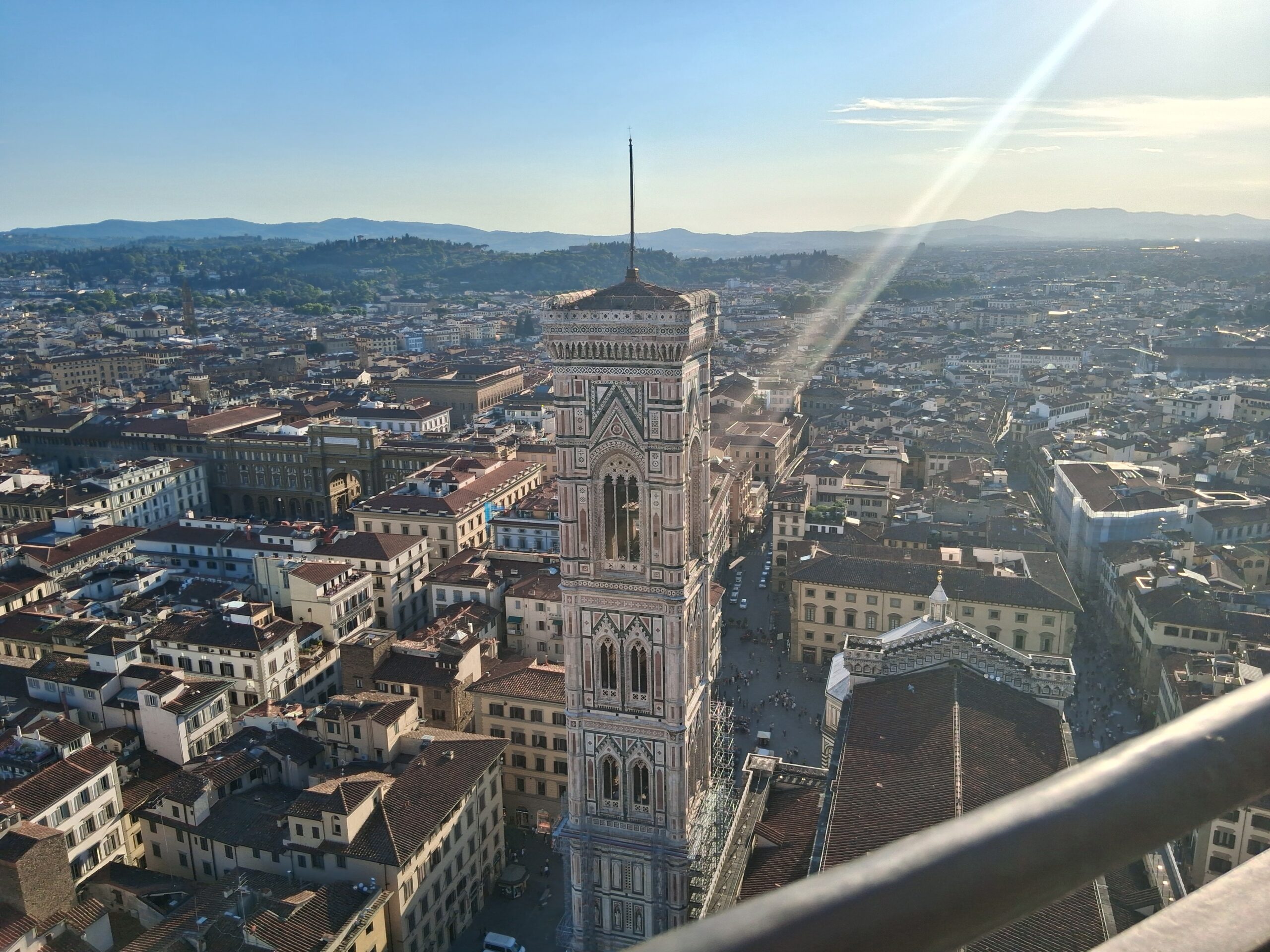
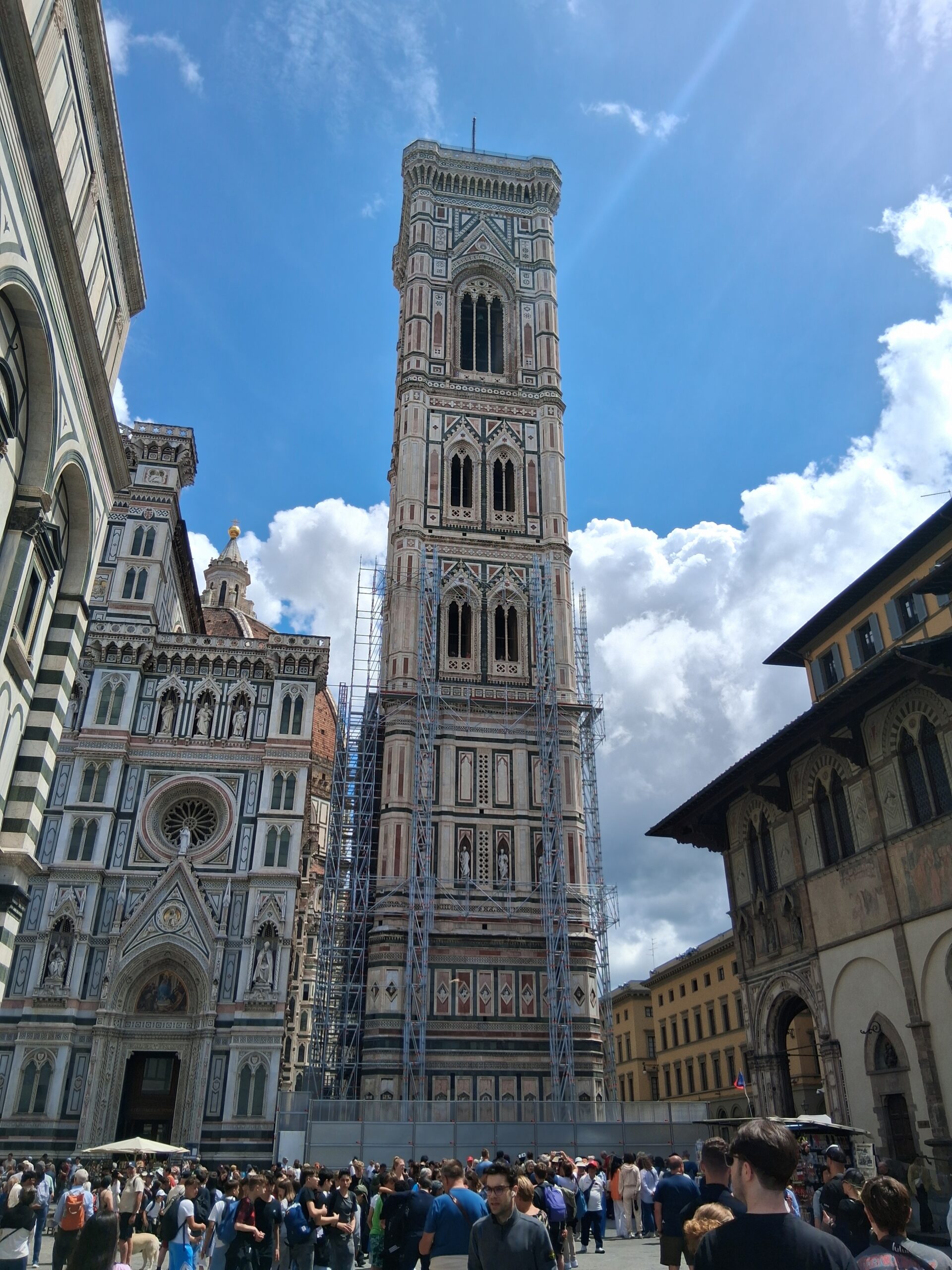
The Florence skyline is home to many iconic buildings that stand as a testament to the city’s rich Renaissance history. The Duomo of the Cathedral of Santa Maria del Fiore is the most recognizable, but the church’s bell tower is not so easily overlooked.
Designed by and named after Giotto di Bondone, the bell tower, or campanile, has existed for over 600 years. It was built alongside the construction of the cathedral and predates the dome by over 60 years. It is an incredible demonstration of the enduring power Florence’s Renaissance structures have.
Giotto was assigned to the bell tower’s construction in 1334. Even though Giotto died only three years after construction began, work continued under the watch of his student Andrea Pisano and later Francesco Talenti. The bell tower was finished in 1359 and has stood strong ever since. The seven bells in the tower’s belfry continue to ring loudly, sounding off six times a day at the “Requiem” (1 a.m.), the “Angelus” (7 a.m., noon and sunset), 11:30 a.m. and the “Credo” (11 p.m.). The largest bell, called “Santa Reparata” or the “Campanone,” was made in 1475 and is one of the largest bells in Italy, weighing 5,385 kg (11871.89 lbs.).
On Feb. 19 of this year, Florence Daily News reported that Giotto’s bell tower would be undergoing a complete restoration under the guidance of the Opera di Santa Maria del Fiore, the organization responsible for all matters concerning the Florence Cathedral monuments. The focus of the restoration is on repairing the degradation of the external marble of the bell tower. The restoration efforts officially began on March 9 and are expected to last about four years. The reported estimated cost is over €7 million ($8 million USD), as reported by Florence Daily News.
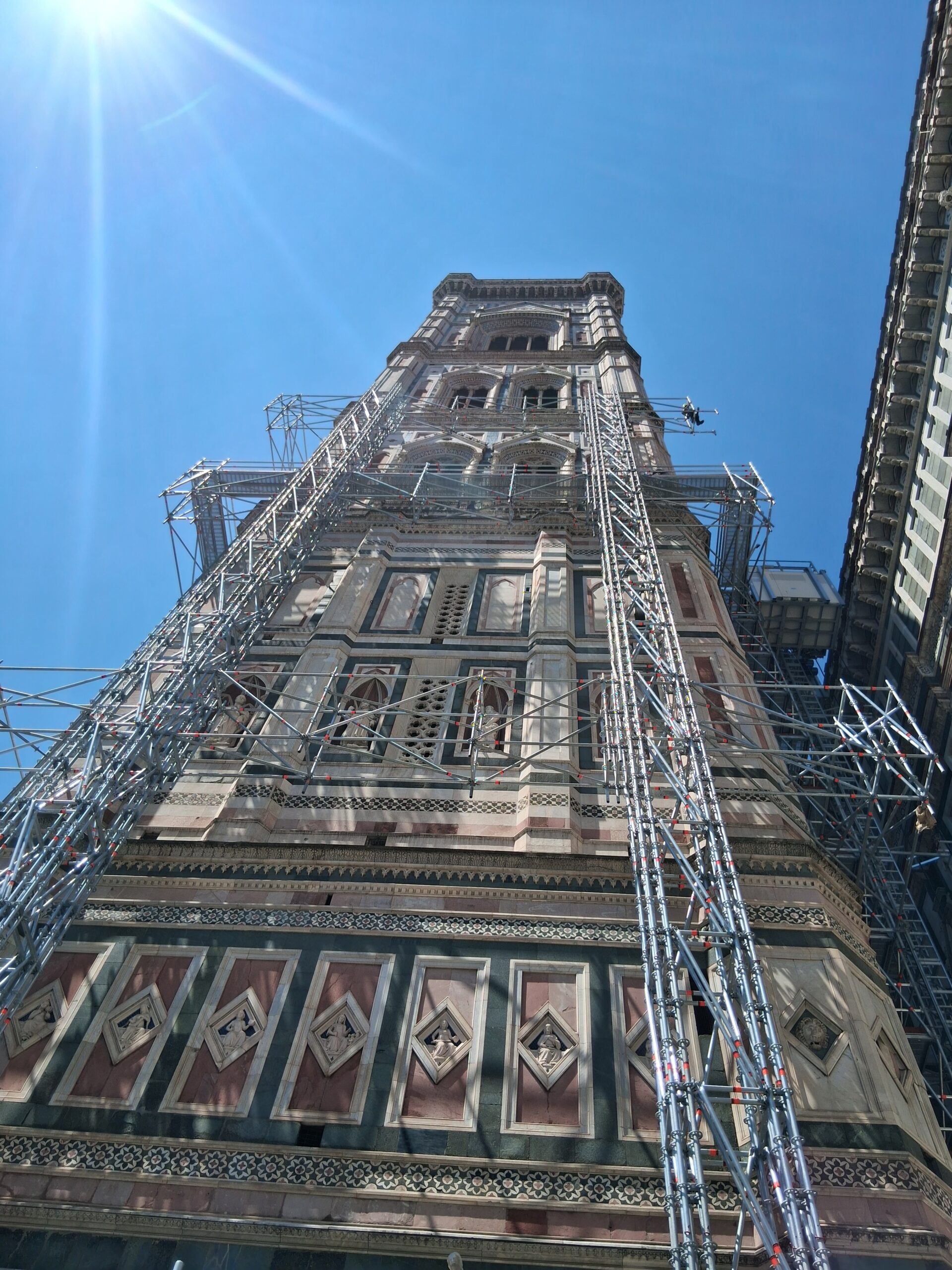
When visiting the bell tower, one can see how the city is balancing restoration with the public’s ability to see the building. Half of the tower is surrounded in scaffolding and workers but still offers a clear view of the striking marble façade. The scaffolding will be fully installed by mid-July, as reported by Florence Daily New. Other areas of the Florence Cathedral that are also undergoing restoration are covered up by cloth sheets that replicate the design of the sections being worked on. But Giotto’s bell tower maintains its visuals for all that come to see the Cathedral.
Even with the ongoing restorations, the bell tower still remains open to the public to climb and is expected to be open for the entirety of the restoration process. Climbing the bell tower is one of the major tourism draws to the Florence Cathedral. Although the Duomo climb is the more popular one, there still are many people who flock to climb one of Florence’s landmarks.
It is important that the bell tower remain open during its restoration as tourism to the Florence Cathedral is a major source of the funding the Opera uses for its projects. VisitFlorence, an independent travel guide based in Florence, reported on Feb. 20 that the bell tower restoration project was being entirely funded by profits earned through ticket sales. It is a significant reminder of how important the bell tower and tourism are to the Florence economy.